Episode 5 · 火 huǒ, fire
火 huǒ, fire: a rule, a burning city, and a chronicle that never settled it
The fifth film is about a woman who burned to death in a house she was free to leave. Song, 543 BC. We expected to make a film about fire and found one about a rule, and about a chronicle that recorded her death and then could not agree about her for two and a half thousand years. Here is the research, with its sources, and the film it turned into.
The film · 10:31 · free on YouTube
The story: a rule older than the house
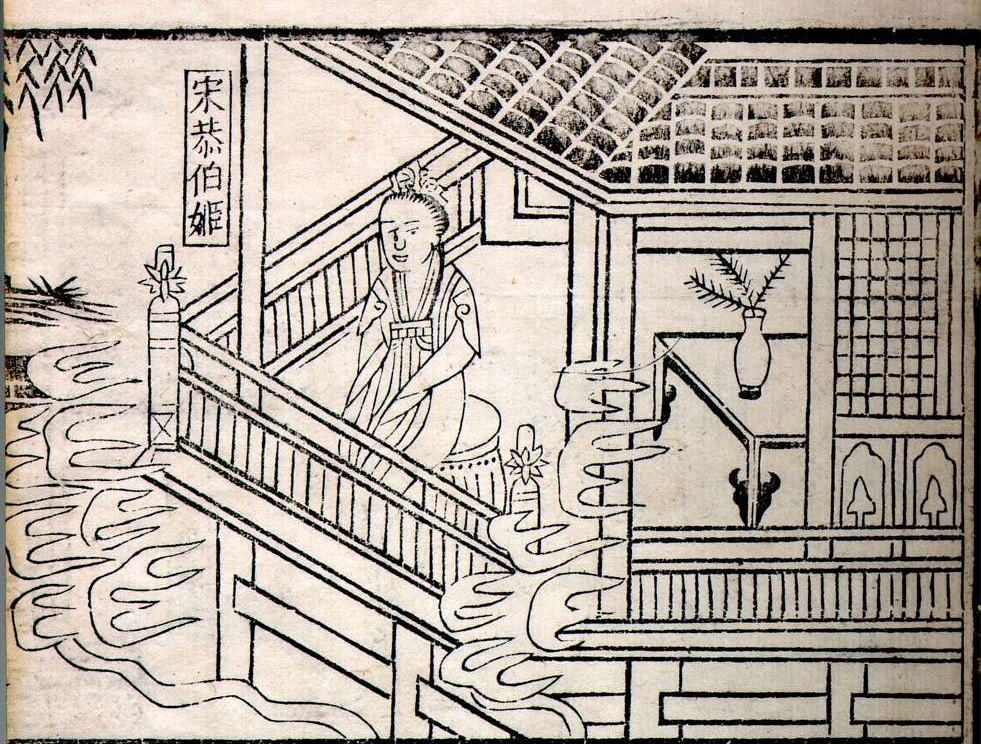
One night in 543 BC the capital of the state of Song caught fire. At the top of the palace steps stood the widow of the last Duke. The fire was two streets away and an officer at the bottom of the steps begged her to come down. She would not, and it was not bravery.
She was keeping a rule. A woman of her rank did not leave her hall at night without both of the women who attended her: the governess who had raised her and the matron who dressed her. On the night of the fire the matron was out in the city queuing for water, because the rains had failed and the wells had run dry. The governess went into the burning streets to find her. Neither of them came back.
Her name was Bo Ji. Bo means eldest. Ji was the clan of the Zhou kings, and her family ruled the state of Lu. She was sent to marry the Duke of Song for an heir, had five years with him, was widowed at about twenty and kept indoors for thirty three more.
What the rule was actually for
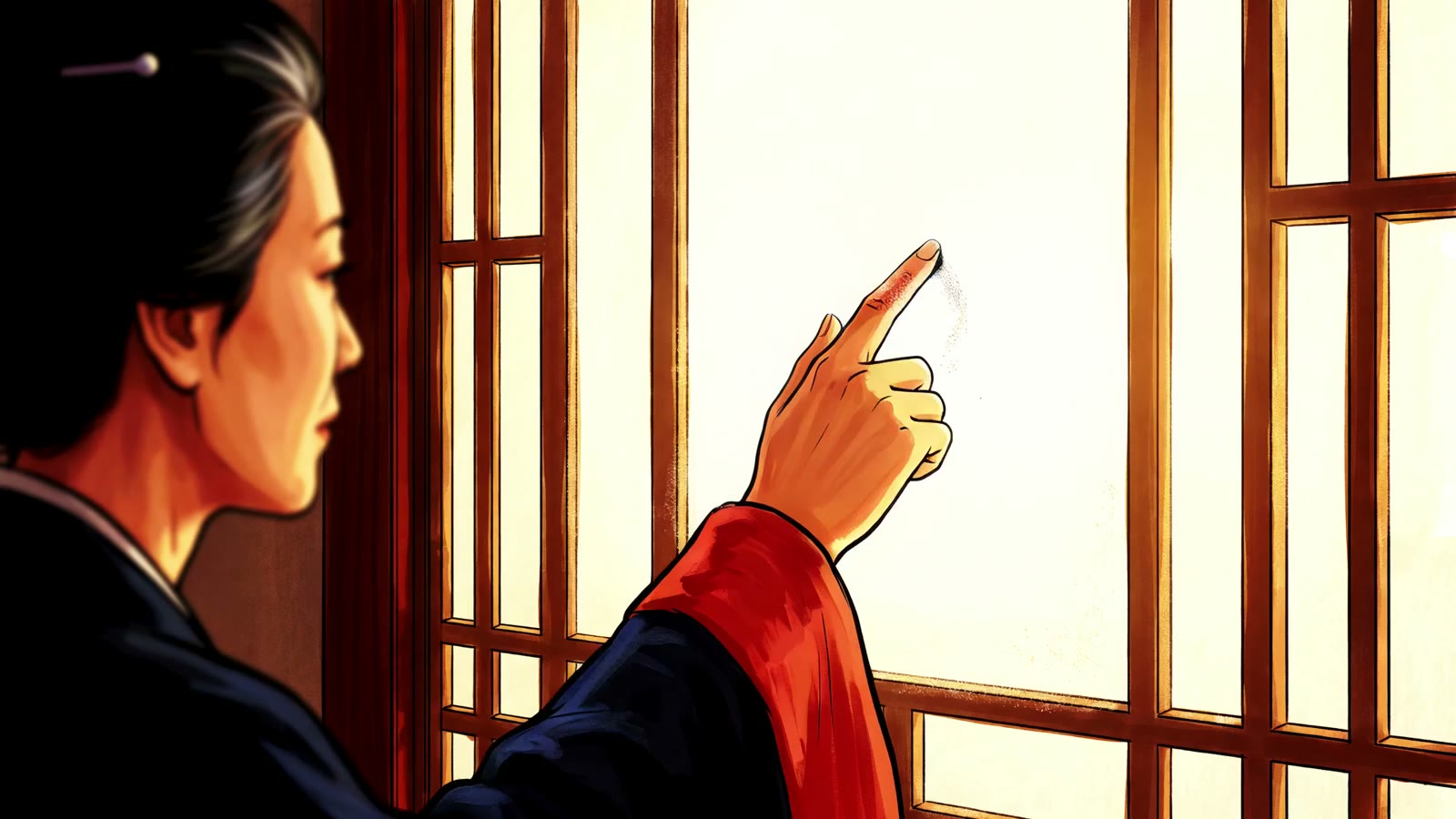
The rule reads as absurd from here, and that is the thing the film is about. It was not a rule about fire. It was a rule about rank, and about who a woman of her standing could be seen alone with, and it had never been written for a night when the city was burning.
A woman of her rank did not stand in the sun. The shade was held up by the two women who walked with her. Take one of them away and she is standing in the fire. The rule and the protection were the same object, which is why she could not put one down without putting down the other.
The night the city burned
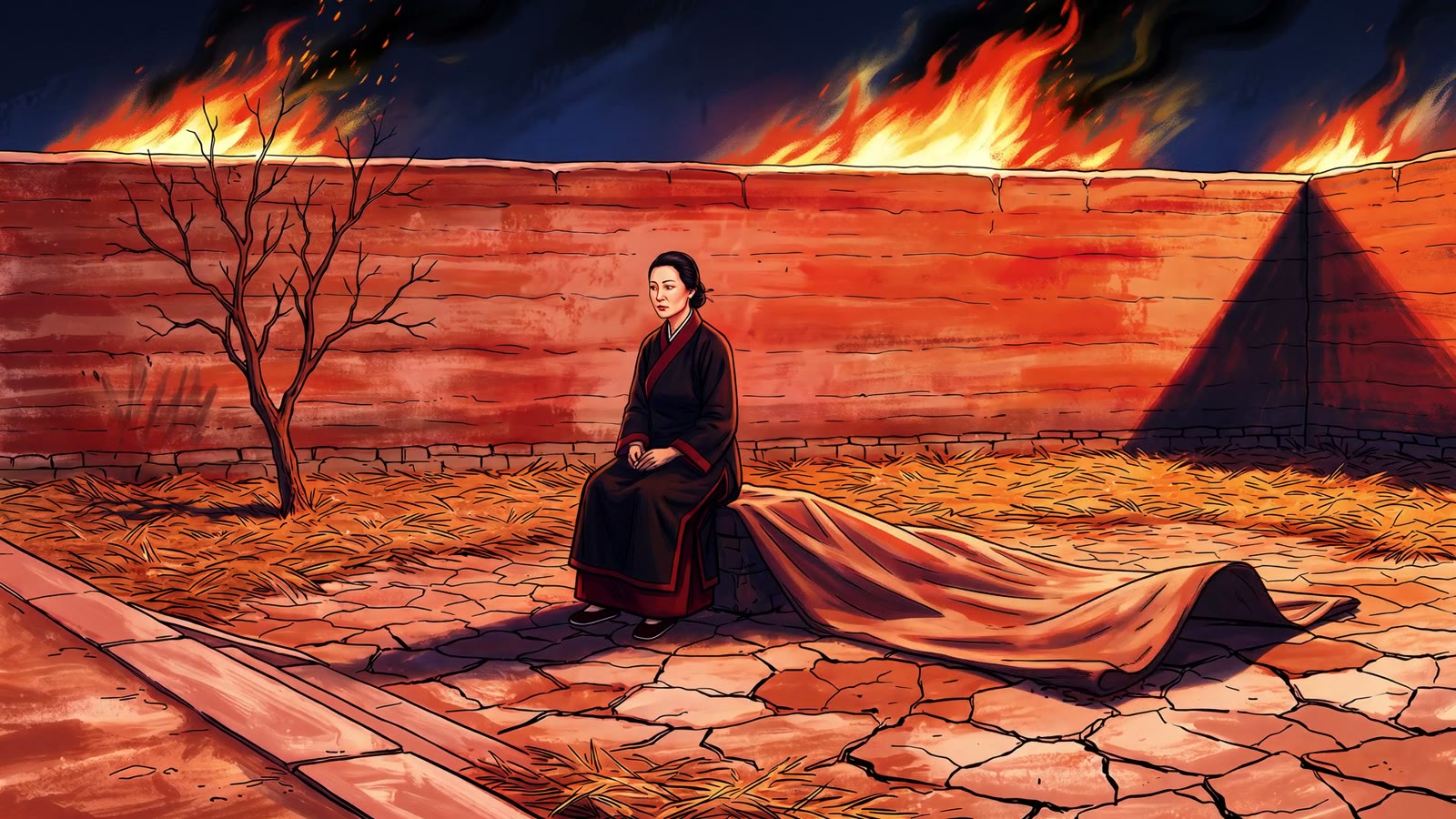
Nobody knows how it started. What the film follows is the shape of the night: the matron sent out at dusk for water and saying she would not be long, the fire nobody could stop, the governess begging to take just the two of them down into the street, and Bo Ji refusing anything less than all three of them walking out of the gate together.
The drought is not decoration. The wells had run dry and water was being carried in from rivers a long way off, which is the reason one of her two women was on the far side of a burning city at the moment the rule needed her.
The chronicle recorded it and then argued
The 左傳 Zuo Zhuan, the commentary that carries the year-by-year chronicle of Lu, records her death and her burial. That is the part nobody disputes. What the sources have never agreed on is what to make of her.
Some read her as the model of a wife, and the 列女傳 Lienü zhuan, the Biographies of Exemplary Women compiled by Liu Xiang around 18 BC, puts her in chapter four, 貞順, among the chaste and obedient. Others read the same facts and say she waited when a wife should have gone. Both readings are ancient. The film does not settle it either, on purpose.
SOURCES: 春秋左傳 Zuo Zhuan, ctext.org. 列女傳 Lienü zhuan, ctext.org. The illustrated edition the hero image comes from is digitised by the Chinese Text Initiative at the University of Virginia, cti.lib.virginia.edu.
火 on the bone, and the character it is mistaken for
火 huǒ is a pictogram of flame. On the Shang oracle bones it is a central tongue with sparks coming off the sides, and it has barely changed in three thousand years. Fire has no body of its own. It is only there while it climbs, and the character draws exactly that and nothing else.
The thing worth knowing is what it sits next to. 火 and 山, mountain, are notoriously close on the bone, close enough that the reading of individual graphs is still argued over. Three rising strokes is a mountain or a fire depending on which way the argument goes, which is a quietly useful fact for a series where the third film was 山.
The family around it is where the thinking shows. 灰 huī, ash, is a hand over a fire: fire that can be picked up. 災, disaster, has an ancestral form that is a roof over a fire, a house burning. 光, light, is a fire above a kneeling person, so light is fire that someone is carrying. 焚, to burn, is a stand of trees over a fire. And 灬, fire flattened to four dots, hides underneath hundreds of ordinary characters where you would never look for it.
SOURCE: graph compositions checked against Wiktionary, which carries the oracle bone and bronze forms for each. The 說文解字 Shuowen line behind 灰 reads 火既滅,可以執持, when the fire is dead it can be held.
What was left in the morning
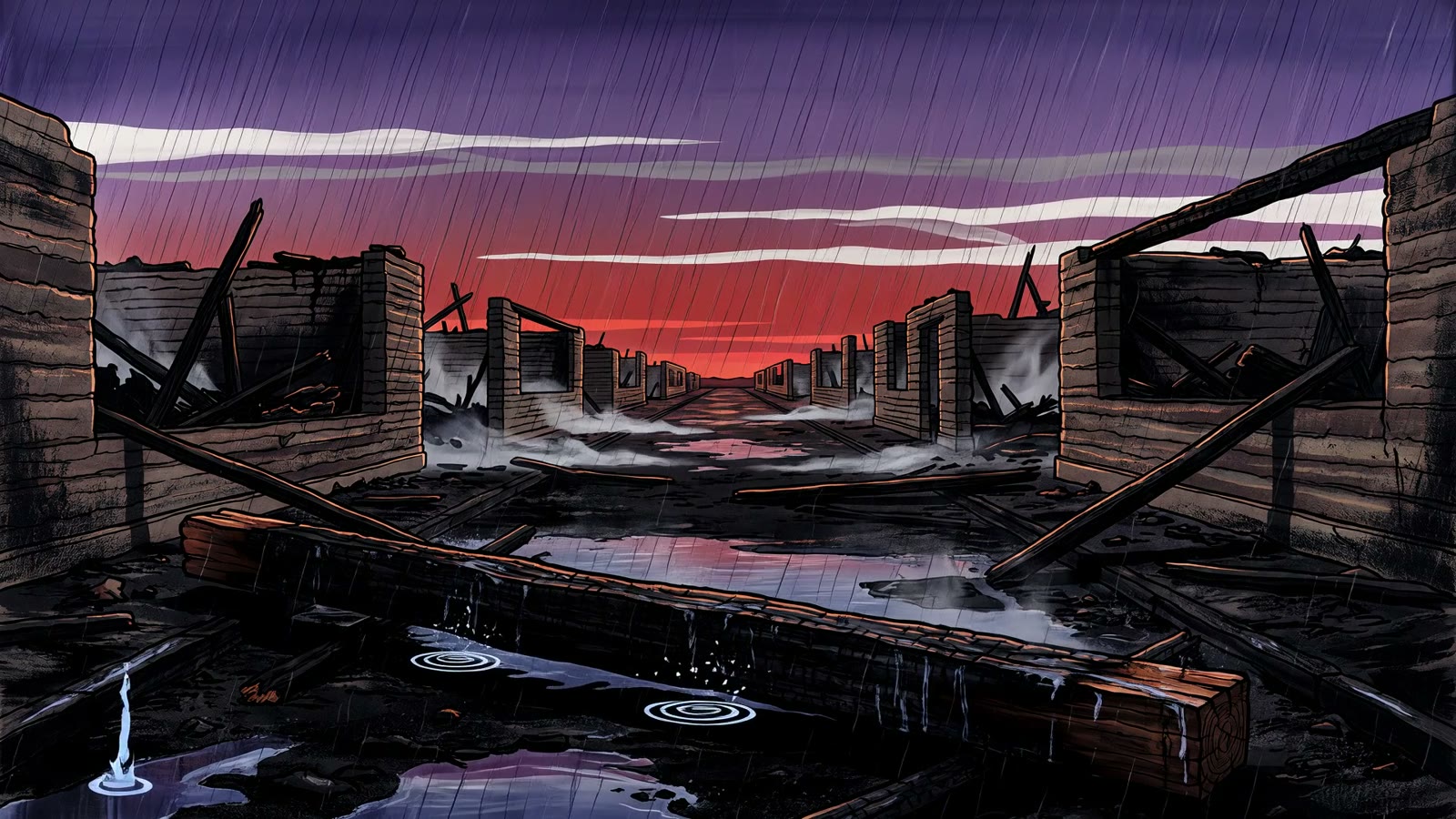
The rain arriving after the fire is the last image in the film. The chronicles record the fire, her refusal and her death. The drought, the water queue and the weather breaking are the film's own, drawn to fill a night the sources leave bare. What is above on this page is the record. The film is a dramatisation of it, which is not the same thing.
What the character gave us in the end was 灰 huī, ash. A hand and a fire. The only form of fire you can actually hold is the one that has stopped burning, and the film ends on a charred stone in the rain rather than on a flame.
The narration, in full
The complete spoken text of the film, 690 words. Published so it can be read, searched and quoted.
Read the transcript
A true story. A woman burned to death in a house she was free to leave. Two and a half thousand years ago, on the plain south of the Yellow River, there was a state called Song. One night in 543 BC, its capital caught fire. At the top of the palace steps stood the last Duke's widow, and the fire was two streets away. An officer at the bottom begged her to come down. She would not, and it was not bravery.
She was keeping a rule, and the rule was older than the house. A woman of her rank does not stand in the sun. The shade is held up by the two women who walk with her. Take one of them away and she is standing in the fire. The woman under the shade is Bo Ji. Bo means eldest. Ji is the clan of the Zhou kings, and her family ruled the state of Lu.
The governess raised her, the matron dresses her, and the three of them go everywhere together. She was born a princess of Lu, the daughter of one of its rulers and the sister of the next. Lu was known for keeping the old rites, and she was raised inside them. She was sent to marry the Duke of Song, and the marriage had one purpose, an heir. The Duke did not come to fetch her himself, as the rite required, so she would not take her place as his wife. It took an envoy from Lu to settle it.
The Duke's name was Gu, and they had five years together. What she wanted was children, and a long life with him. They were ordinary years, and she would have taken more of them than she got. The house was waiting for a child. So was she. In the sixth year he died, and Bo Ji became a widow.
So the house closed round her. A widow of her rank kept indoors, and the garden was as far as she was allowed to walk. Mornings were the heavy part, and when she closed her eyes she went back to Gu. So she drew him the same mark in the dust every day: a flame, with the climbing already in it. Fire has no body of its own. It is only there while it climbs. She drew the one thing that cannot hold still, and she went on drawing it for thirty three years. And when the rain stopped coming, the wells ran dry, and water came from rivers far away.
The house needed water for the night, and by then you queued for it. The matron went out at dusk to fetch it, and said she would not be long. Nobody knows how it started. You can only take away the next thing it would burn. She would not come down. So Bo Ji told him: a wife does not go down from her hall at night without both of them.
Even now, she was thinking of Gu. He had been raised inside the same rule. One of her women was with her. The other was still out in the burning city with the water jar. The governess begged: just the two of them, down into the street, and nobody would ever speak of it. Bo Ji wanted all three of them walking out of that gate together, and would take nothing less.
So the governess went into a burning city at night to find the matron. Neither the governess nor the matron returned. She listened for the gate. The fire came over the garden wall. The rain came. Late.
The chronicle of Lu recorded her death, and her burial. Some said she was the model of a wife. Others said she had waited when a wife should have gone. They have not agreed about her since. Still holding the fire after three thousand years. You can say it now.
That's the fire. Next time. Water. The oldest way of writing it is a line of current with the water still breaking around it. And thank you very much for being here.
Every frame is painted by hand
This is Natasha at the desk.