Episode 2 · 月 yuè, moon
月 yuè, the moon: four civilisations looked up and all of them saw a hare
China, India, Mesoamerica and southern Africa all looked at the moon and saw the same animal. The Buddhist hare came up the trade roads into China, but China already had its own, and the Mexica and the San were an ocean and a continent away from both.
The film · 12:53 · free on YouTube
The moon is defined by not being the sun
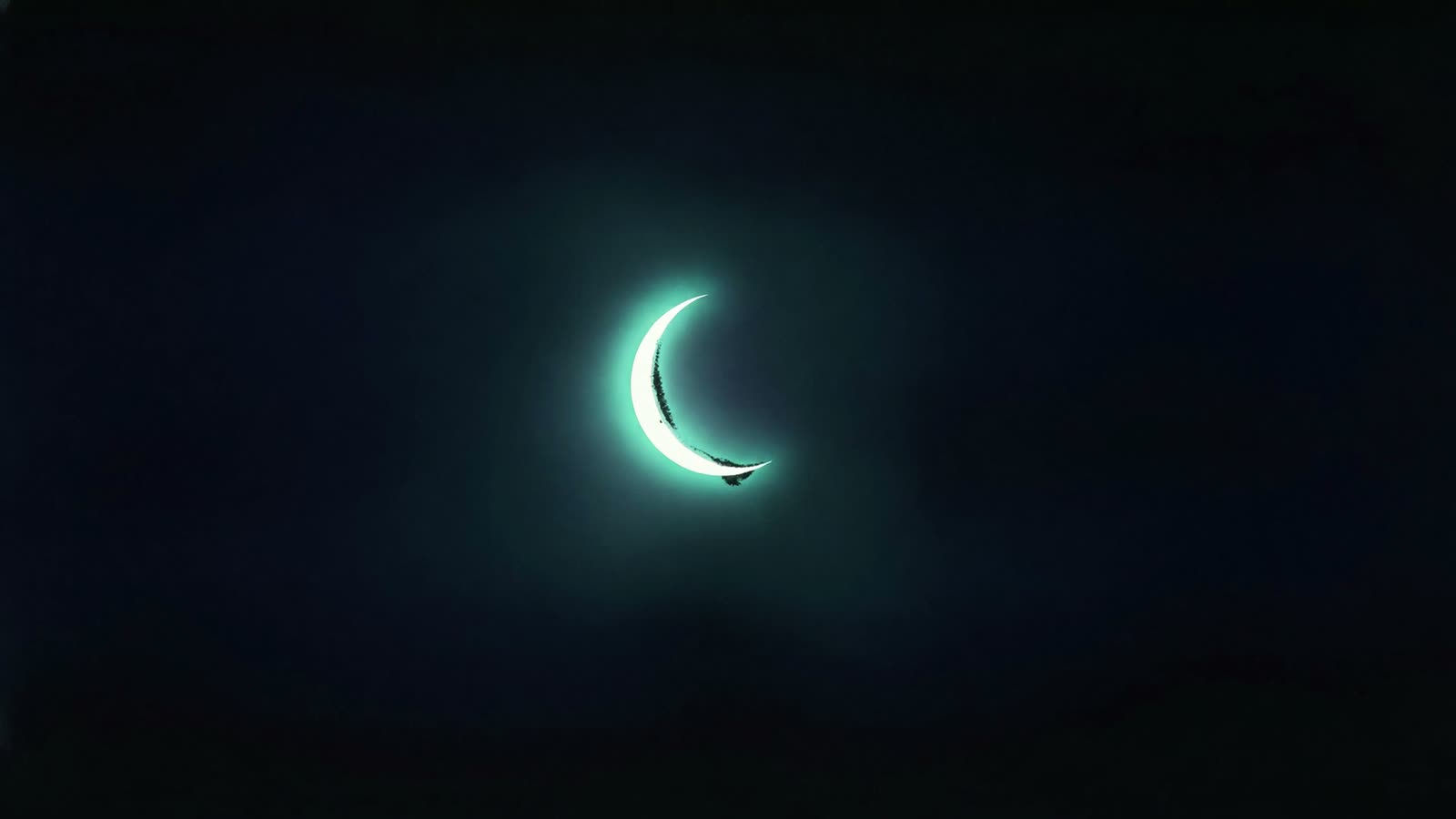
The oracle bone 月 is a crescent, and it is a crescent for a reason. The sun had already taken the circle. 日 rì is the closed circle with a dot in it, so 月 yuè had to be the other shape. The moon in Chinese writing is defined by not being the sun. The two characters were invented against each other.
The character for evening, is the same pictograph with a stroke removed. Moon and dusk are one drawing, separated by subtraction. And the character for bright, ming, is the sun and the moon set side by side, which is where this channel gets its name.
The hare, everywhere
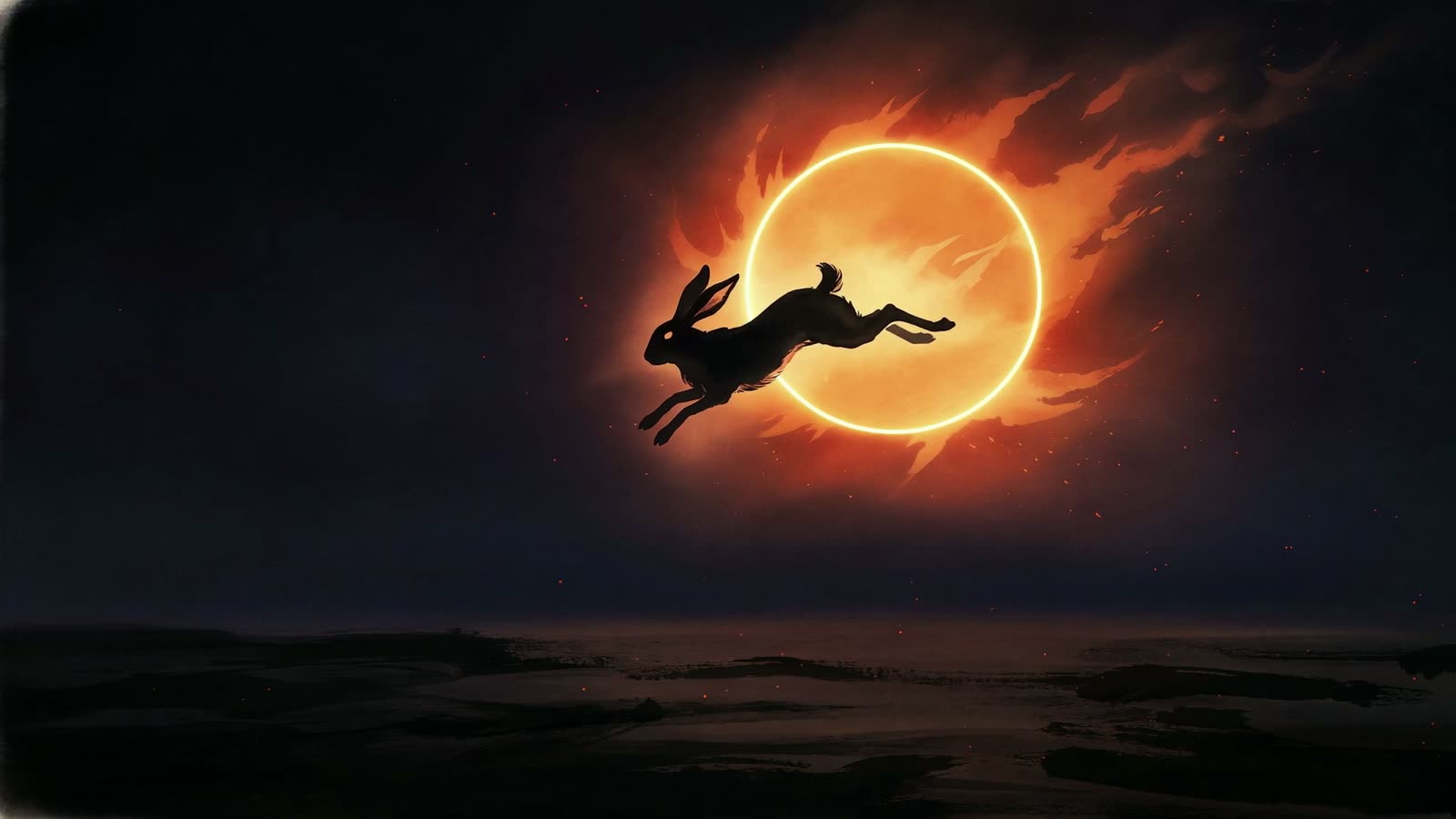
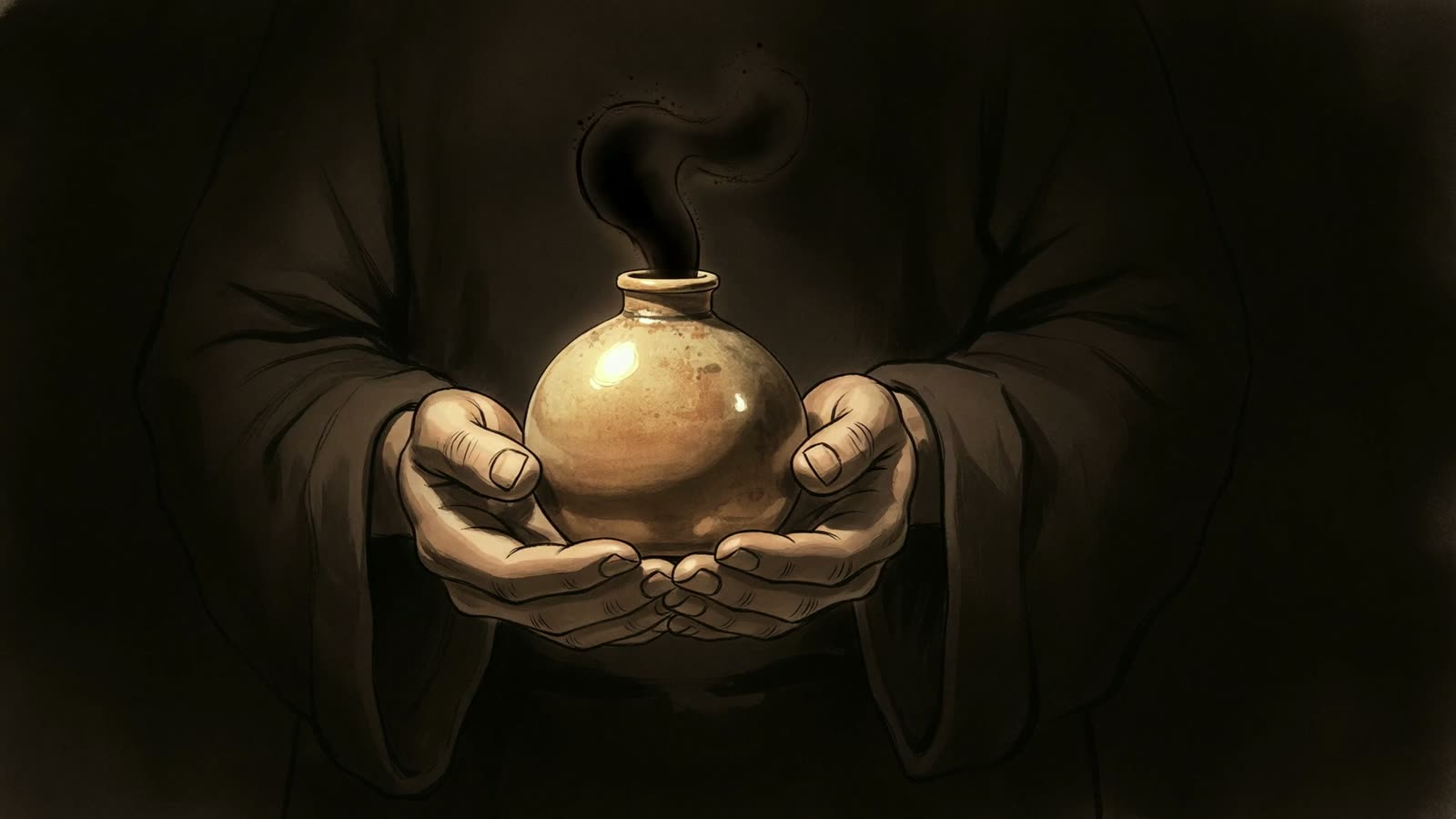
China has its own: the jade hare, yutu, pounding the elixir of immortality beside a cassia tree. Japan and Korea have the same animal pounding rice cakes instead.
This is the hare people look for at the Mid-Autumn Festival, on the fifteenth day of the eighth lunar month, when the moon is at its fullest of the year. The festival's own story is Chang'e, who swallowed the elixir and rose to the moon, and the hare is the one who pounds it for her. So the animal keeping the character's oldest company is also the animal on the mooncake boxes.
In India, the Śaśa Jātaka: a hare with nothing to offer a starving traveller throws itself onto the fire so the man can eat, and a god draws its likeness on the moon so it is never forgotten.
In the Aztec telling, two gods competed to become the sun. One hesitated at the fire, one jumped. The one who jumped became the sun. The one who hesitated became the moon, and because he shone too brightly and threatened to rival the sun, the gods threw a rabbit in his face to dim him, and the mark it left never came off.
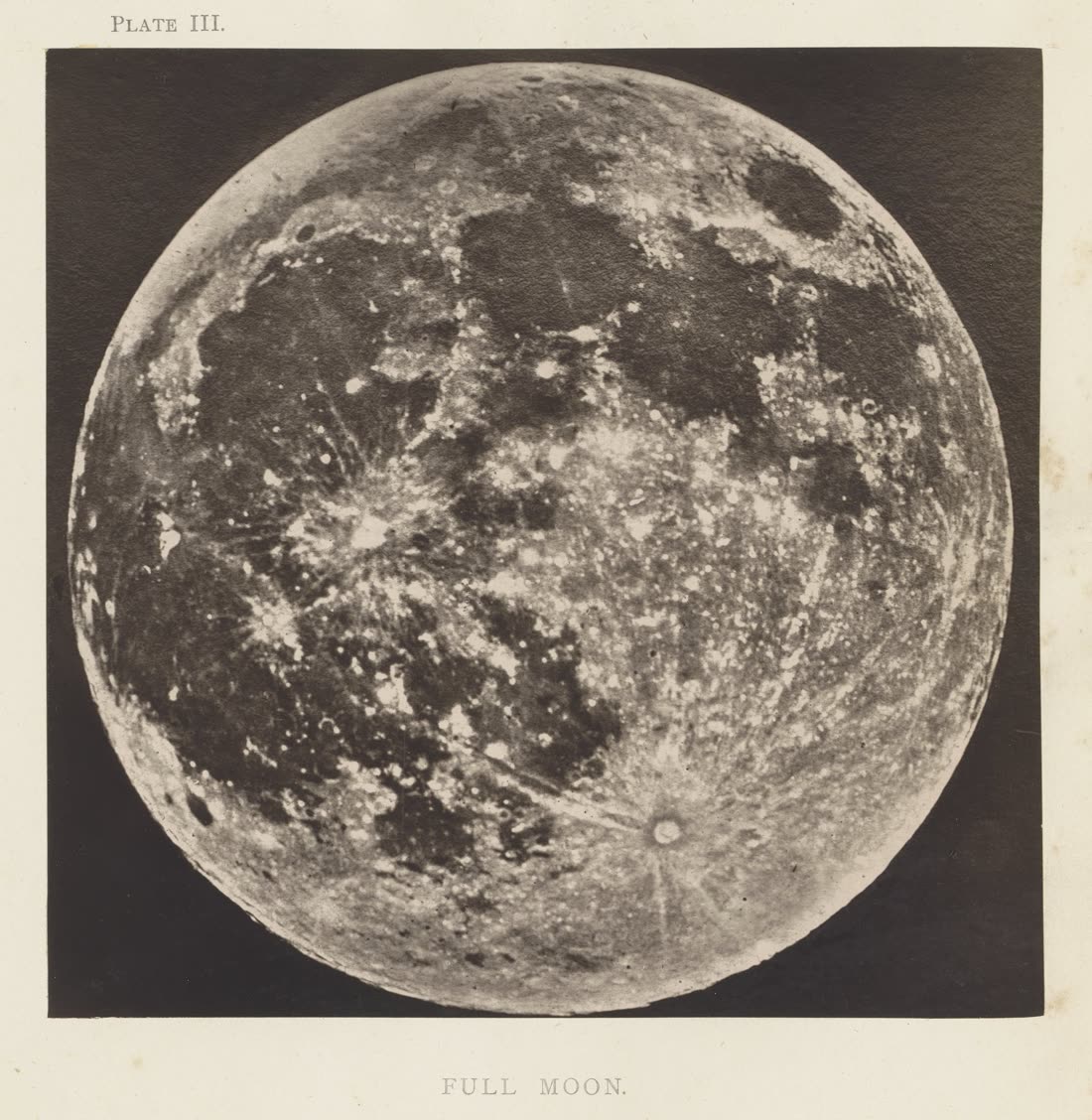
And the dark plains genuinely do look like a hare, which is the least mystical explanation available and also the best one. Same rock, same human eyes, same shape. It means nobody was inventing anything. They were all describing what was in front of them.
What the record actually looks like
These are not from the film. They are the objects behind it.
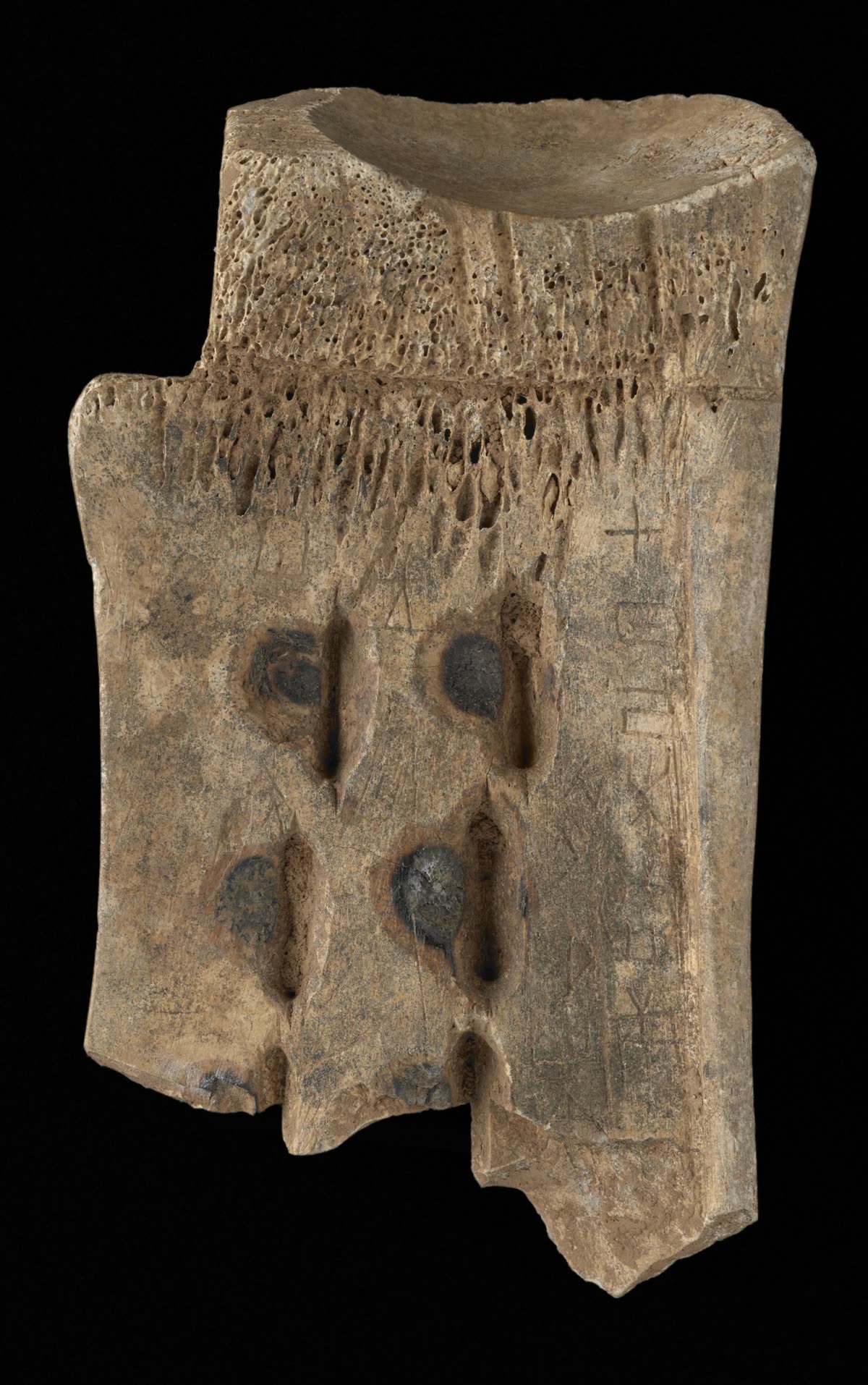
The message that was carried wrong
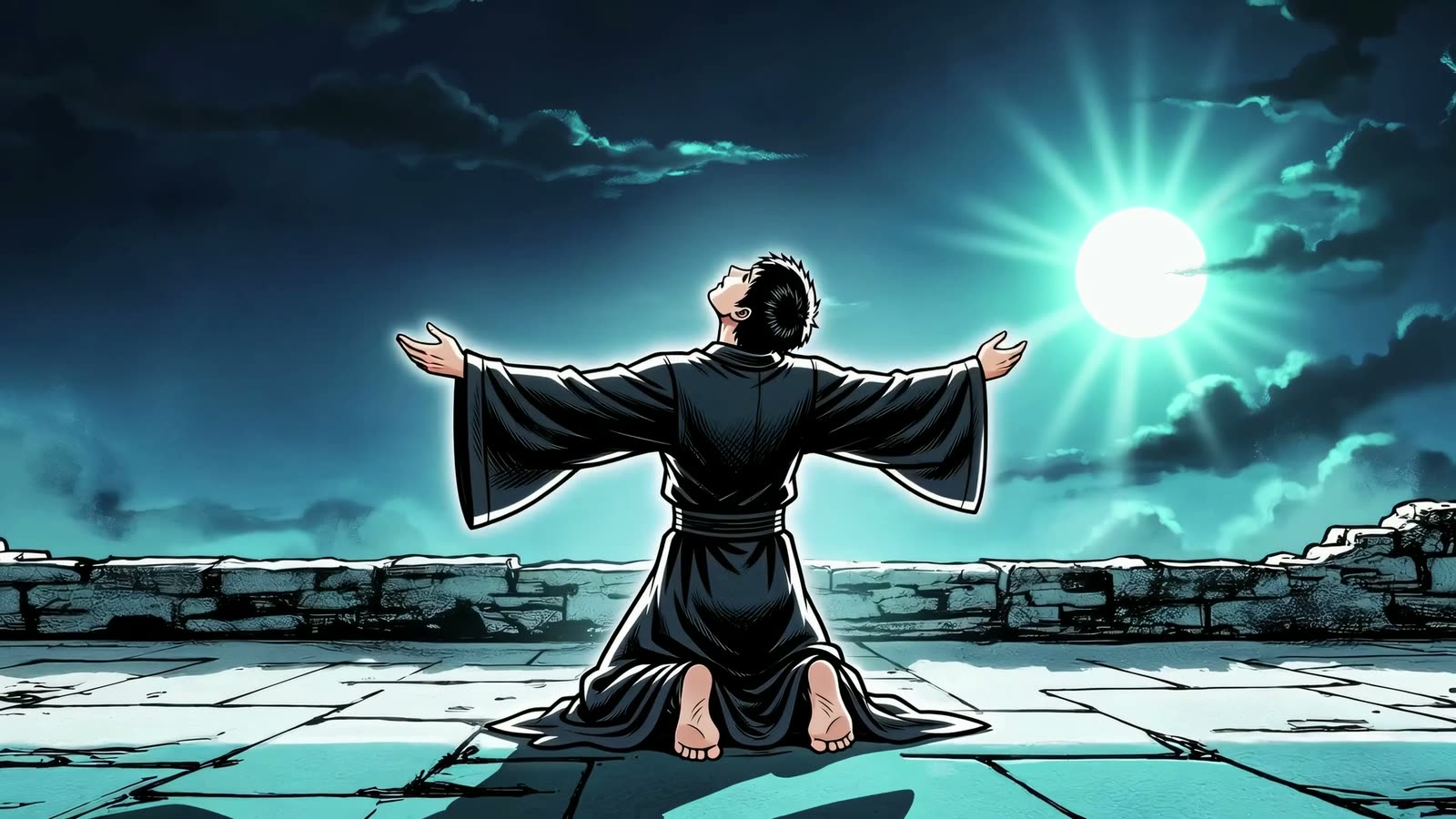
The Khoikhoi and San tell it differently, and this is the one the film ends on.
The Moon sends a message to humankind: as I die and return, so shall you. The hare carries it, and delivers it backwards: as I die and do not return, so shall you. The Moon strikes the hare across the mouth and splits its lip, which is why hares are cleft-lipped.
Humanity is mortal because a messenger got the message wrong, and the punishment is a mark left on a face that records the accusation ever afterwards.
The narration, in full
The complete spoken text of the film, 1066 words. Published so it can be read, searched and quoted.
Read the transcript
'I die and I do not come back and neither will you' said the hare. There is a hare on the moon. People found the hare on both sides of the planet. This film is about more than a hare or a moon. It is about a message that got told wrong - and about writing, which people invented so it could not happen again. In China, a woman called Chang'e drank the elixir of immortality and floated up to the moon. The hare is the one who grinds it. He is still up there watching over us preparing medicine.
A Buddhist story has a different hare. A starving traveller asks him for food and he has none, so he steps into the fire. The traveller is a god. He paints the hare on the moon so nobody forgets. That story came up the trade roads from India. China already had a hare on the moon and their own story. An ocean away, the Mexica looked up and found their hare. Two gods contended for the honour of becoming the sun; the one who flinched at the fire lost, and rose anyway, insufferably brilliant, a second sun in a sky with room for one, so the other gods flung a rabbit into his face to quench him.
It worked. The bruise is still up there. That is how the second sun became the moon. Many see a hare. Nobody agrees how he got there. In one telling, he stops being decoration. He becomes a courier... and a courier is judged by what he carries. In southern Africa, among the Khoikhoi, the moon had one message for the people.
As I die and come back, so will you. The moon gave it to an insect. The hare caught the insect on the road and said, you are a poor runner, let me take the message. So the insect gave the message up and the hare misunderstood and got it backwards. What the hare delivered was... as I die and do not come back, so will you. The moon was furious, and struck the hare across his mouth. The hare's lip is cleft... to this day.
And the hare, running, reached up and raked her face as he went. Not a picture of him. A wound he left. The shape you can see up there tonight is the shape of a message going wrong. The insect belongs to one telling. The claws belong to another.
There is another way... to send a message. Three thousand years ago in China, someone scratched a shape into the shoulder bone of an ox. This is the oldest way anyone wrote the moon. It is not a circle. It is a sliver. Which is strange, because the moon is round. Except it is only round for a night or two in twenty-nine. The rest of the time it is a slice - a hook - a paring of light.
So the sliver is honest. The full circle was already taken... That one is the sun. Look at them now and you would think they were family... They are not. Watch what happens to it. A knife will not cut a curve. So on bone the moon comes out angular and thin, its back broken into short straight strokes.
Then somebody decided everyone should write the same way. And every rounded thing in China went straight. The sliver of moon became a box. Taller than the sun, standing on its end, with two lines across it instead of one. Not family. Neighbours. The blade changed how it looked.
It never changed what it said. Three thousand years... and it still says moon. Around the year 730, a poet named Li Bai sat in a room a long way from the province where he grew up and wrote a poem of twenty characters that children in China still learn by heart. Bright moonlight in front of my bed. I took it for frost on the ground. I raise my head and look at the bright moon.
I lower my head and think of home. He dreams. But there was something wrong. He was in a room full of people, and a man stood up and pointed at him. That's the one who told it wrong. Every conversation in the room stopped at once.
He ran. Behind him the crowd came out into the street, and then more, until the road was a mile across and filled wall to wall and they were still arriving. They were chasing, they were angry and neither dead nor alive. Full of dread... the fault was his, and his alone, because he told the message wrong. He came to a hill and climbed, and the ground went out from under him; every handhold crumbled as he took it, and every step gave back two. At the top he looked over the other side.
Below him was a wood, and in the middle of the wood a pool, and in the pool... the moon. He reached down and broke it. And they came out of the trees... in their thousands. He raised his head. And it was only the moon... still there, still keeping its single appointment. Two people a thousand miles apart can look up in the same moment and see the same object, at the same size, in the same phase... and that is why the poem works.
Your head lowers to read the poem.. His head lowers... because he is a long way from home...The moon lowers... to come back, and let you live again. I raise my head and look at the bright moon. That is not what Li Bai wrote. The oldest text of it we have, from the Song, has a different character there. I raise my head and look at the mountain moon. Over time the message was changed.
The mountain came out and the brightness went in. Then it went into the schoolbooks, and the schoolbooks won. Bright moonlight. Li Bai's first line was also not his words. They are ours now. So look up.
It is already there. It dies, and it comes back. And that sliver. Still holding the moon after three thousand years. You can say it now. That's the moon.
Next time. The mountain. The one they took out of the poem. And thank you for being here.
Every frame is painted by hand
This is Natasha at the desk.