Episode 3 · 山 shān, mountain
山 shān, the mountain: the holes worn into the rock by people carrying tea
For a thousand years tea went west out of Sichuan, and the first hundred and forty miles were too steep for any pack animal. That stretch crossed on human backs. The staffs those people leaned on wore holes into the rock, and the holes are still there.
The film · 16:27 · free on YouTube
The first hundred and forty miles
Sichuan grew the tea and Tibet wanted it, so for a thousand years a trade ran west over some of the most hostile ground on earth. Tea went one way, horses came back the other. The route is the Tea Horse Road.
The first hundred and forty miles, out of the town of Ya'an, crossed ground so broken and so steep that no pack animal could make the journey. Whatever crossed those miles crossed on a human back. After that, animals took it on. The porters did not go to Tibet. They went to Kangding, and that whole stretch is inside Sichuan.
The people who carried it
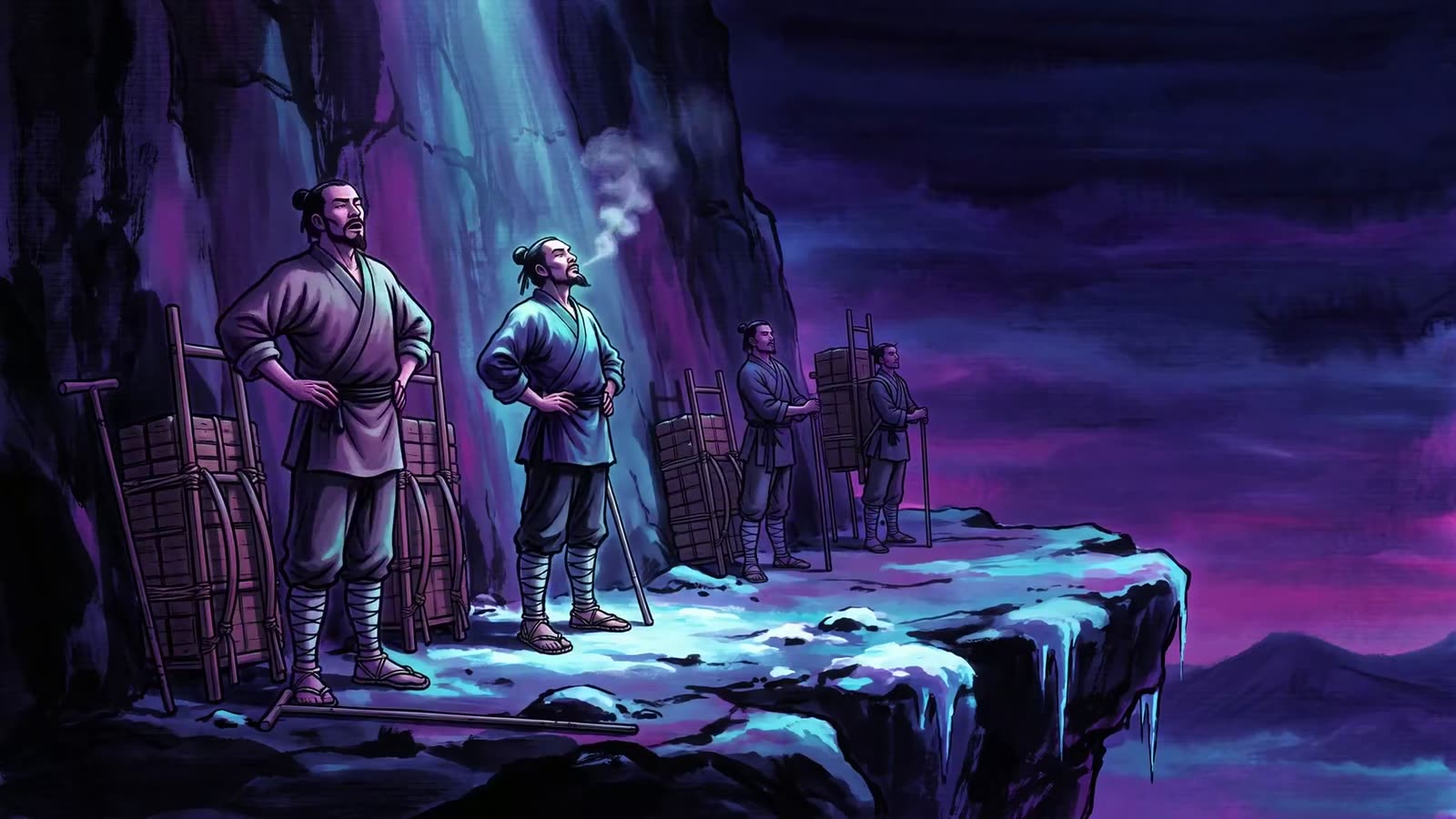
The porters were the poorest people the road could find. Men, women and children, hired for their backs and their legs because that was all the road required. The tea arrived pressed into hard bricks, lashed to a wooden frame strapped to the back and stacked above the head. Loads ran sixty to ninety kilos, routinely more than the carrier's own body weight.
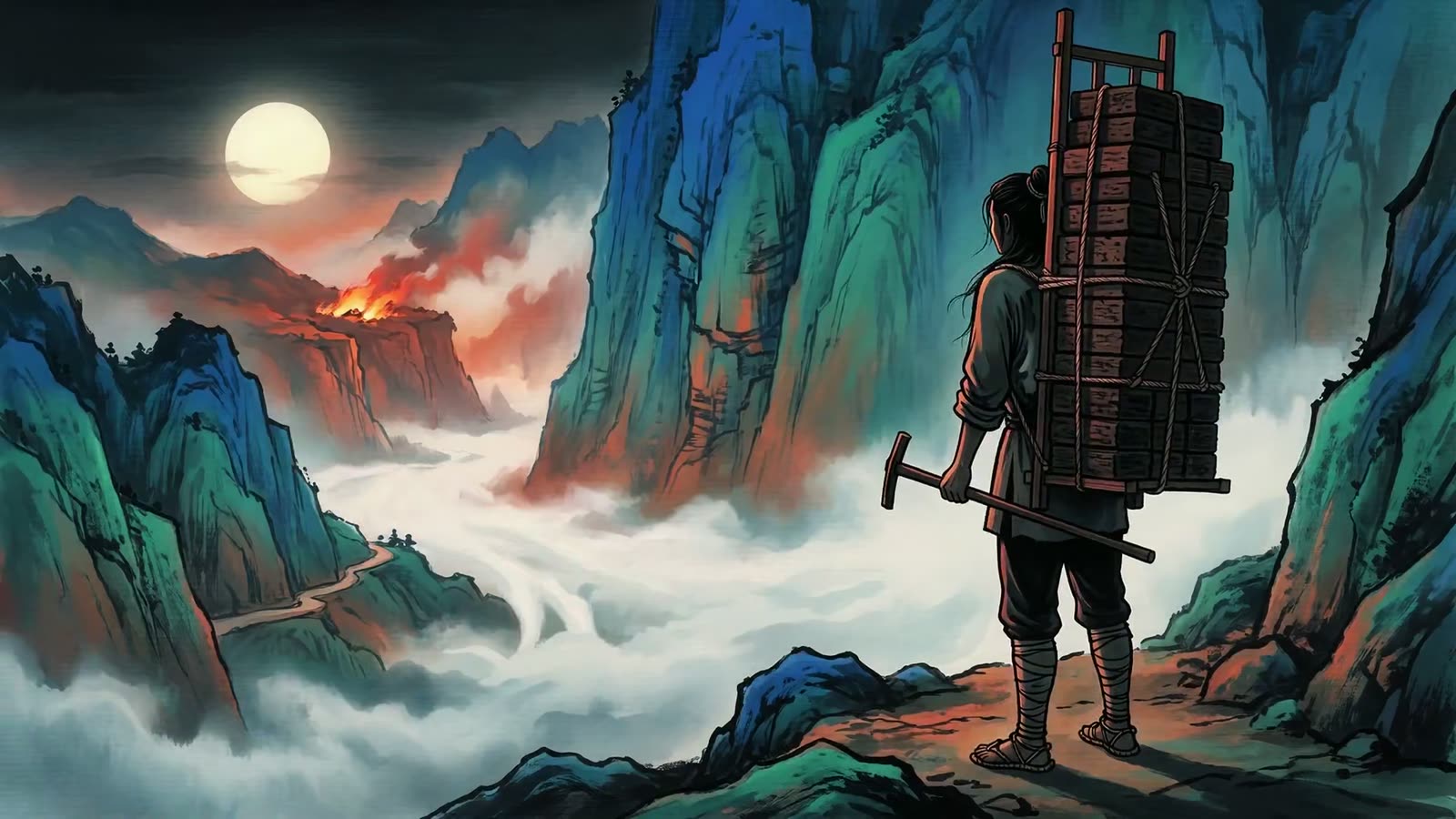
A load that heavy has one rule: it cannot come off. Set a ninety kilo tower of tea down on a mountain path and there is no lifting it back again.
One honest correction to our own film. Harvard's label on Ernest Wilson's photograph of the Sichuan tea porters, taken around 1908, reads: one man's load weighs 317 lbs. Avoird. the other's 298 lbs. That is 144 kilos and 135 kilos. Our narration says sixty to ninety, which is the figure usually given, and Wilson's own caption says some men carried far more than that. The record is at Harvard Library.
A note on the photograph
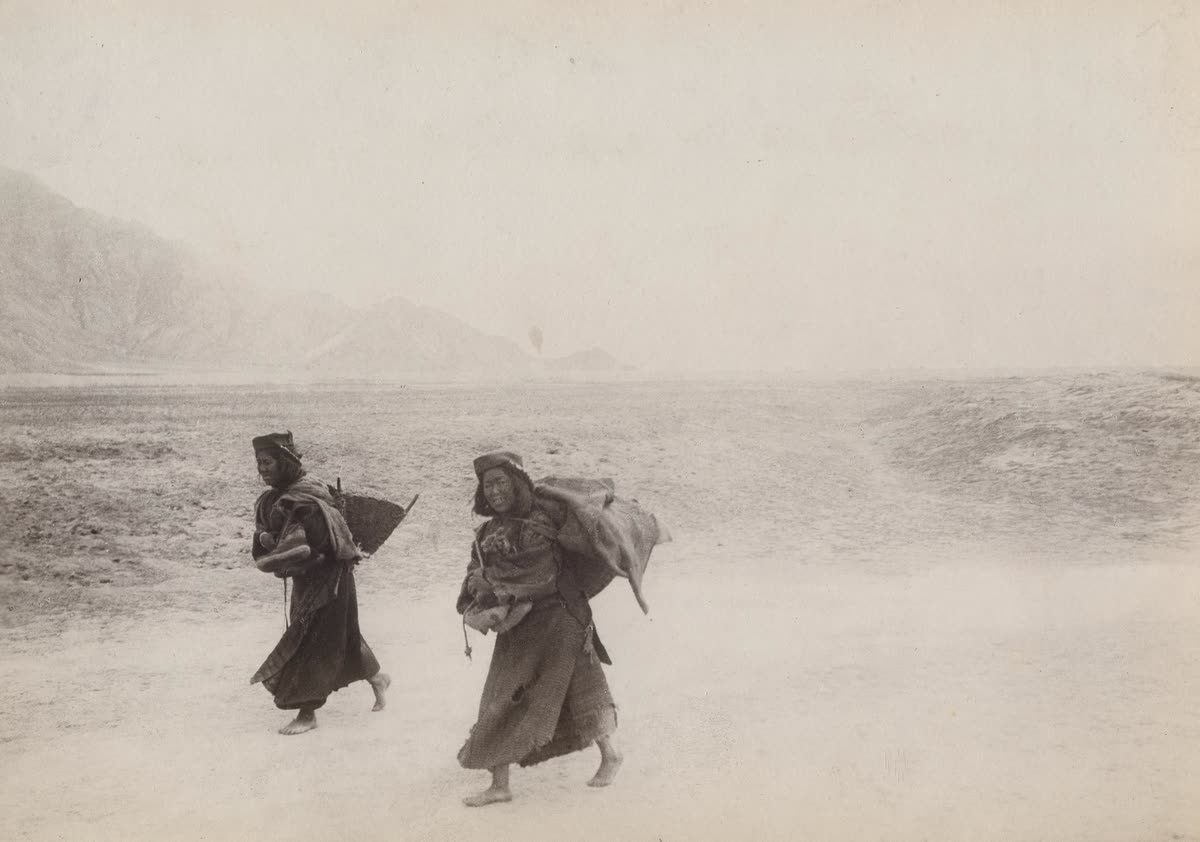
We have not been able to clear a photograph of the Ya'an road itself. The Harvard and Methodist mission holdings are either still in copyright or need written permission, and the best Sichuan negatives are held by a family estate in China. The picture at the top of this page is central Tibet rather than the tea road, and those are not tea loads. It is the nearest cleared image we have found of what the work looked like, and we would rather say so than let you assume otherwise.
The holes are still there
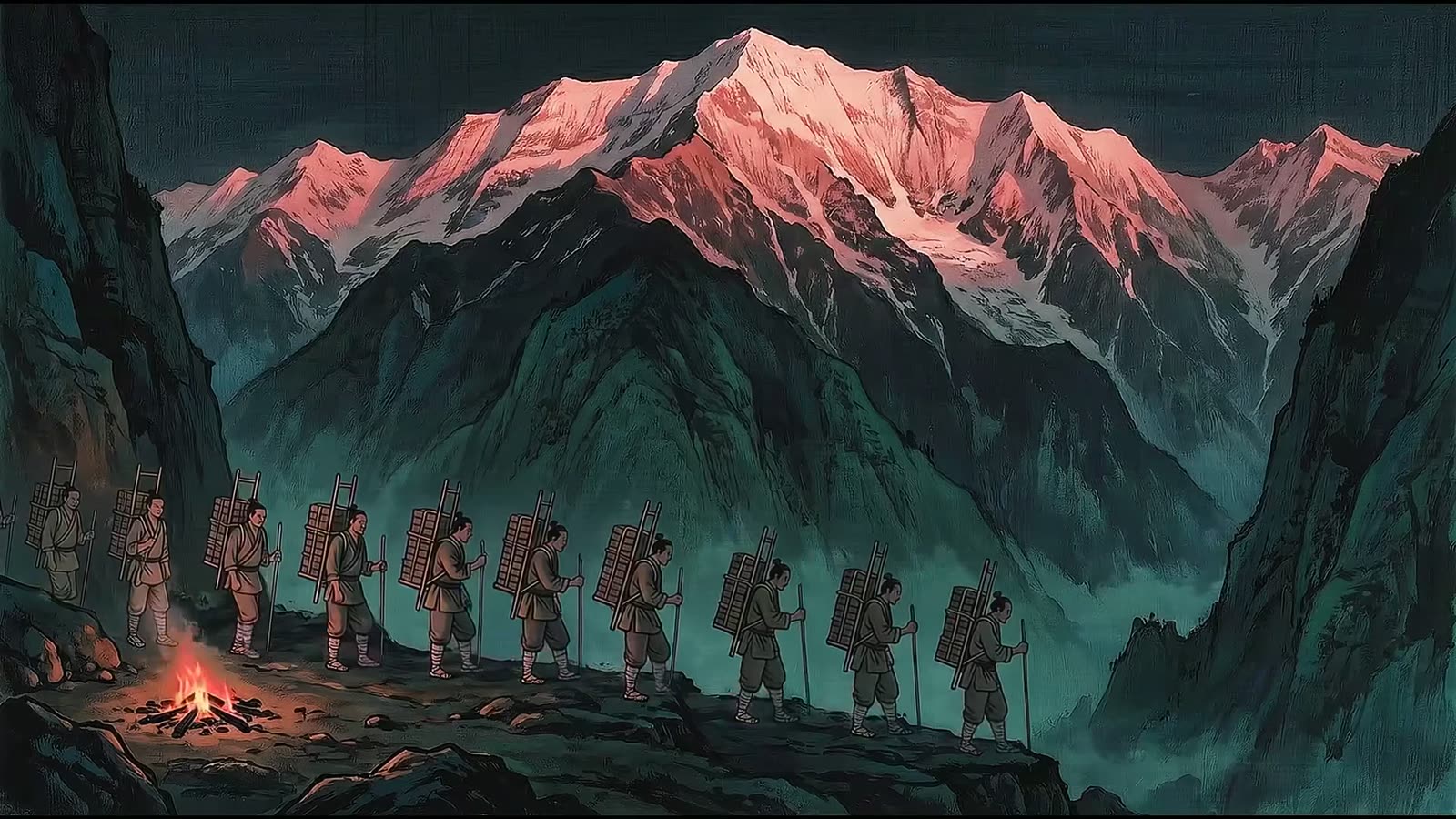
So each porter carried the only answer to that problem in one hand. A short wooden staff, T-shaped at the top, iron-tipped at the bottom. Every few steps you stop, plant the staff, rest the edge of the frame on the T, and stand there still inside the straps, letting your legs breathe. Then you walk again.
Every few steps, for a hundred and forty miles, and people did that for a thousand years.
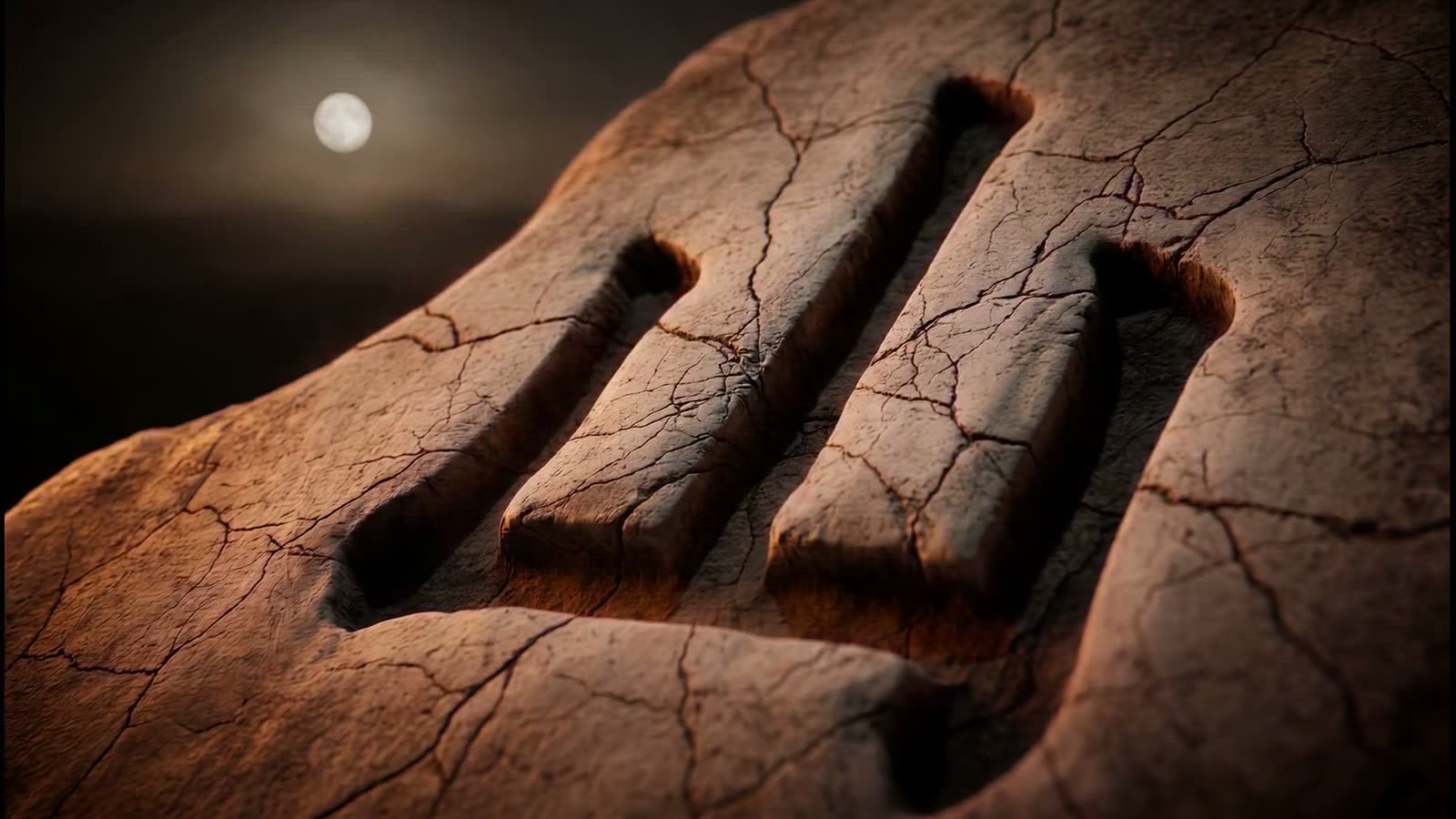
The iron tips wore holes into the rock. Rows of small round hollows in the stone above Ya'an, filling with rainwater. We should say where this comes from: it is reported in Chinese accounts of the 茶马古道 and repeated by people who have walked the old trail, and we have not been able to clear a photograph of the holes themselves or trace it to a published survey. Treat it as well attested rather than as something we have verified. That is the image the whole film is built around, and it is the reason the episode exists: a hundred thousand people leaning on the same spot until the mountain gave way.
The mountain drawn as a body
There is a second strand in the film, and it is the gentlest thing in it. Zong Bing, 375 to 443, passed the imperial examinations and refused office, then spent his life walking to famous mountains and playing the qin. In old age he became too infirm to climb.
So he painted the mountains he had walked onto the walls of his own room, lay looking at them, and called it travelling. Woyou, travelling lying down. His preface on landscape painting is one of the earliest pieces of Chinese art theory there is, and it was written by a man who got too old to climb and refused to stop going.
His own line, and the one that belongs next to the porters: when I play the qin, I want all the mountains to resound.
The narration, in full
The complete spoken text of the film, 1045 words. Published so it can be read, searched and quoted.
Read the transcript
Beijing. A stone called Neijing Tu, at the White Cloud Temple. Carved on it, a landscape. The stone is famous in Beijing. People come to stand in front of it and wonder what it means. We go back to the year 750 AD. Somewhere in the mountains west of Sichuan, a line of porters is moving. One of the porters is named Wei. This is the Tea Horse Road in Southwestern China. And down in the gorge, a line of porters follows a route worn into the rock by the ones before them. For a thousand years tea moved west over these mountains, and yaks, horses, mules and camels moved east in return.
The first hundred and forty miles of the tea road going west from the town of Ya'an crossed broken ground so dangerous and so steep that no pack animal could make the journey. Whatever made the journey, made it on a human back. So the road used the poorest people it could find. They were called bèifū, hired for their backs and their legs, because that was all the road required. Tea does not travel loose. It was pressed into bricks hard as wood, lashed to a frame, and the frame went onto a back, stacked higher than the head beneath it. Sixty to ninety kilos of it, smelling of wet earth and old smoke. After five days it's in the hair. A load that size cannot be lifted twice. Once it was up it stayed up, because nobody on a mountain path can lift ninety kilos back onto their own shoulders.
So it never came off, and it wore them. New porters bled at the hands, the shoulders, the lower back and the feet. The ones who lasted carried the heaviest loads. They had learned to be somewhere else while they walked. And they could not sit down. So they rested standing, on an iron-tipped staff cut like a cross, jammed under the frame to hold the weight a minute at a time. Eight miles was a good day, through landslide and gorge, over bridges with cloud where the ground should be. And they walked it as a line, so nobody could stop. One porter hesitating on a rope bridge held everyone behind them, and on a plank that wide there was no going around. Which left you your speed, and both speeds could kill you. Fast meant trusting a thin sandal on a board that might give. Slow meant giving the wind time to take you off the mountain.
Wei had given up counting the weight on the first morning, because counting the weight did nothing when the weight would not change. What Wei counted instead was steps — every morning a number was picked at random, and when the counting reached that number it started again at one, because the mind needed something to hold onto. Wei had given up looking at the distance on the third day. What was left was the mountain, and the line of backs in front. Ten at the last halt. A porter who fell behind above Ya'an did not catch up.
Lao Song had a little ceramic vial, which was a surprise, because he did not look like a man who could afford one. The group did not say the word for wolf on this road. The word they used instead was mountain soldier. They did not say the word for tiger. Instead they said high eagle. To survive, Wei knew they had to keep their wits about them.
Wei looked at the ground three steps ahead, and thought about the fire. And about Kangding, and the wage waiting there. And about the fact that the wage only existed if Wei arrived to collect it. And about whether this would be the last trip. Whatever was in the vial had worn off by dark. Ten at the last halt. Counted the group again. Nine. Nobody said either word.
Wei slept in a sack of woven palm fibre. A scribe at Anyang cut the same three into bone, two thousand years before this night. The mountain is ideal for carving with a knife. Wei drew the mountain as it was seen, without a second thought. Drifting further into the mountain, Wei's mind wanders. Two mountains are blocking the foolish old man's door, Every errand means the long way around. They sit exactly where the road ought to be.
So he calls his family together and tells them they are going to remove the mountains. They pick up baskets and begin to dig. A wise old man watches the family dig for a while and then laughs. The wise old man says: look at yourself. You are ninety years old, and you could dig for the rest of your life and fail to level a hilltop. And those are mountains. When I die, the foolish old man said, my sons will keep digging. When they die, their sons. And their sons after them. Generation without end. And the mountains do not grow.
The gods hear this and take fright. A family that cannot be outwaited. And they move the mountains themselves, and the door opens onto level ground. Nobody moved the mountains for the porters. Wei had never met the foolish old man, and knew how he spoke. The two old men argue all night. Neither of them wins.
The mountain sits in the eye as Wei wakes. Wei did not sleep again. Her head, a mountain at the centre of the world. Her spine, a river flowing through her. Under her ribs, terraces. And on the terraces, people working.
She looked inside and discovered her mountain. Take the Chinese character for person and set it beside the character for mountain and the two together make a third character... Immortal. A person who goes into the mountains... and does not come back the same way. She stood and faced the road. It's hers to carry.
At Kangding she could stop. She had been carrying two the whole way. Still holding the mountain after three thousand years. You can say it now. That's the mountain. Next time.
The tree. The one they drew with the roots still on. And thank you very much for being here.
Every frame is painted by hand
This is Natasha at the desk.