Episode 1 · 日 rì, the sun
日 rì, the sun: a toothache, a medicine shop, and the oldest readable words in China
The first film is about 日 rì, the Chinese character for sun, and the ox shoulder blades it was cut into three thousand years ago. What we did not expect to find was that the discovery story everybody repeats is far tidier than the evidence for it. Here is the research, with its sources, and the film it turned into.
The film · 13:04 · free on YouTube
The story: a question, a hot brand, and a crack
Three thousand years ago the Shang ruled from a place we now call Anyang, in northern China. They wanted to know the future and they asked the dead, which meant asking their own ancestors, which meant a procedure.
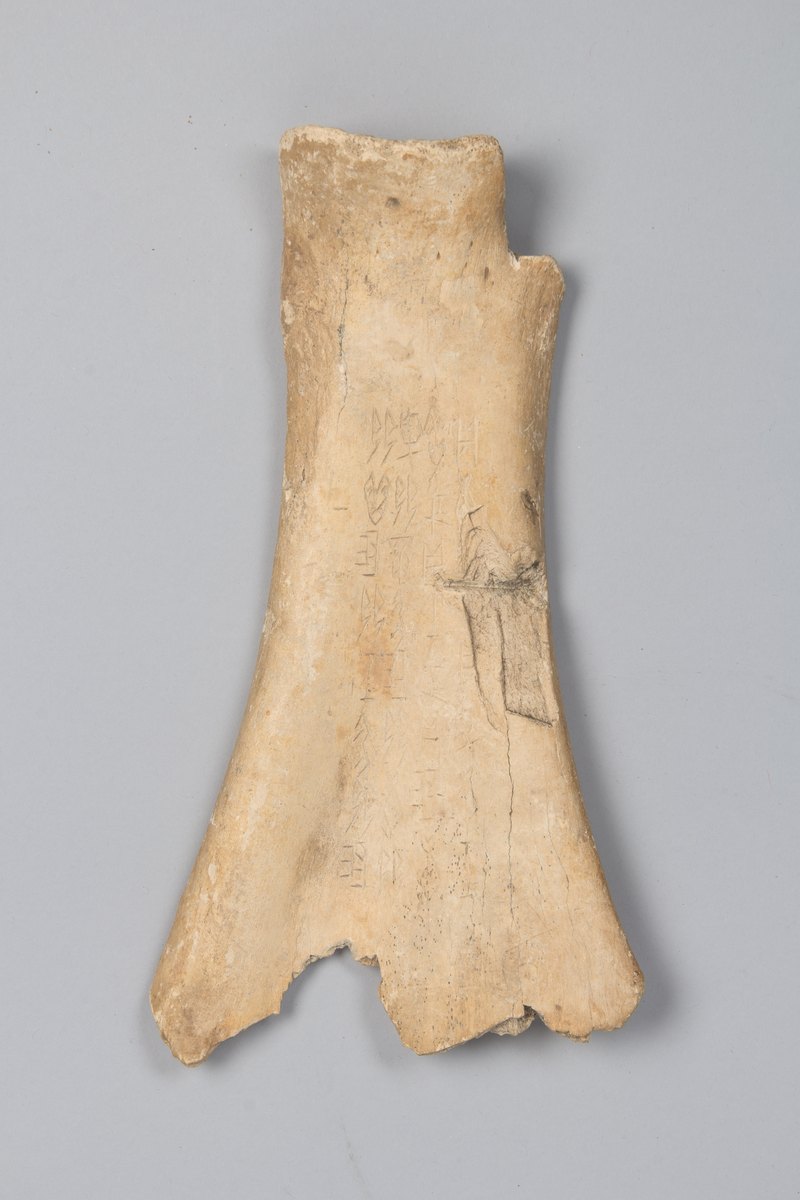
You took the shoulder blade of an ox or the flat underside of a turtle shell. You cut your question into it. Then you pressed a hot brand against the back until the bone cracked, and the shape of the crack was the answer. Then, and this is the part that made the film, you cut the answer in next to the question, so the dead could not wriggle out of it later.
The questions are not what you would guess. Will it rain. Will the harvest hold. Will the king win his war. And somewhere in the pile, a bone that asks more or less whether the king's toothache will stop hurting in the night. Some of the oldest writing in China is not a poem or a law. It is a man with toothache asking the universe to be kind.
Why the sun is a circle with a dot in it
On some of those bones, when they wrote the sun, they drew a circle with a single point at the middle. Not rays, not a face. A disc with something in the centre of it.
That is 日 rì, and it has survived three thousand years of being written by hand, squared off by brush and then by print, into the character on your keyboard now. The circle became a rectangle and the point became a line, and nothing else happened to it. It is the same picture.
The medicine shop story, and why we hedged it
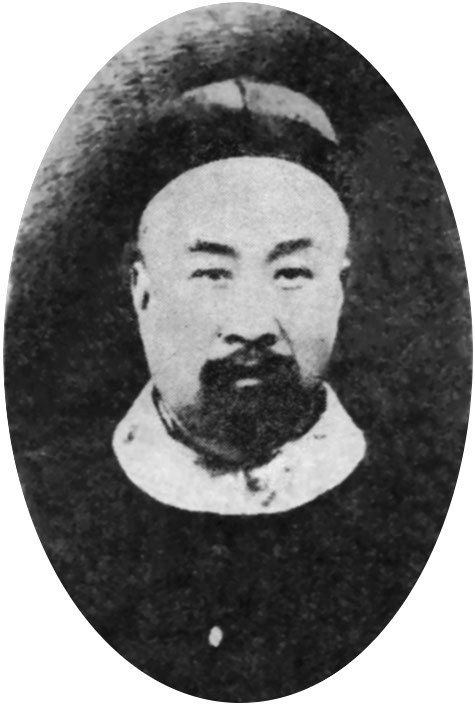
The Shang fell, the bones went into the ground and were forgotten. Farmers ploughed them up for centuries with no idea what they were holding, and a lot of them ended up in medicine shops, sold as 龍骨 dragon bones and ground into powder as a cure for whatever ailed you.
The story everyone tells is that in 1899 a scholar named Wang Yirong was ill, looked down at the dragon bone about to be ground into his medicine, saw writing cut into it, and realised he had nearly swallowed the oldest readable words in China.
We say "the tale goes" in the film on purpose. The anecdote is repeated everywhere and it appears in print well after the fact, which is the usual shape of a story that got tidier each time it was retold. What is solidly documented is that Wang Yirong collected the inscribed bones and recognised them as ancient writing, and that after his death in 1900 his collection passed to Liu E, who published the first printed collection of oracle bone inscriptions, 鐵雲藏龜, in 1903. That is the part you can stand on.
We left the anecdote in and flagged it rather than cutting it, because how a discovery story hardens into fact is itself the interesting thing.
The objects in the film
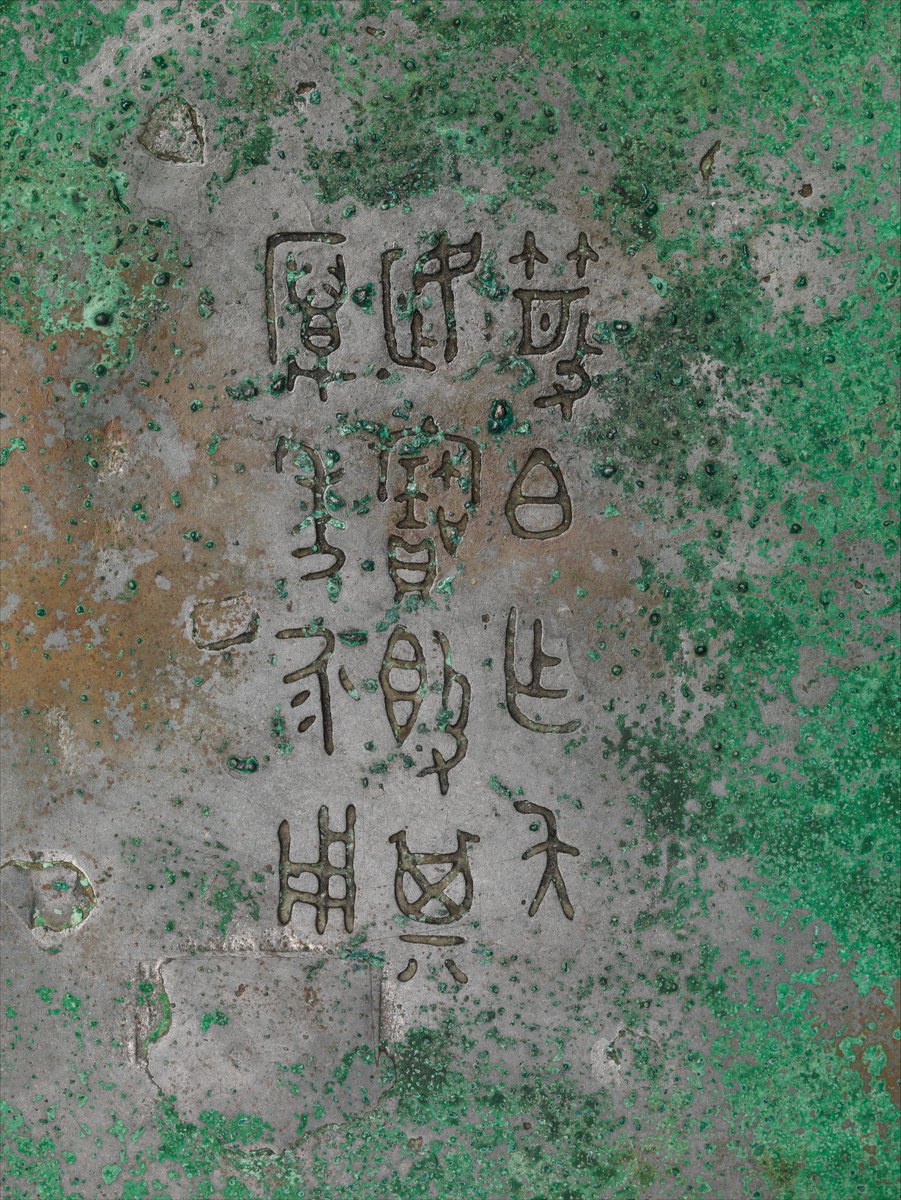
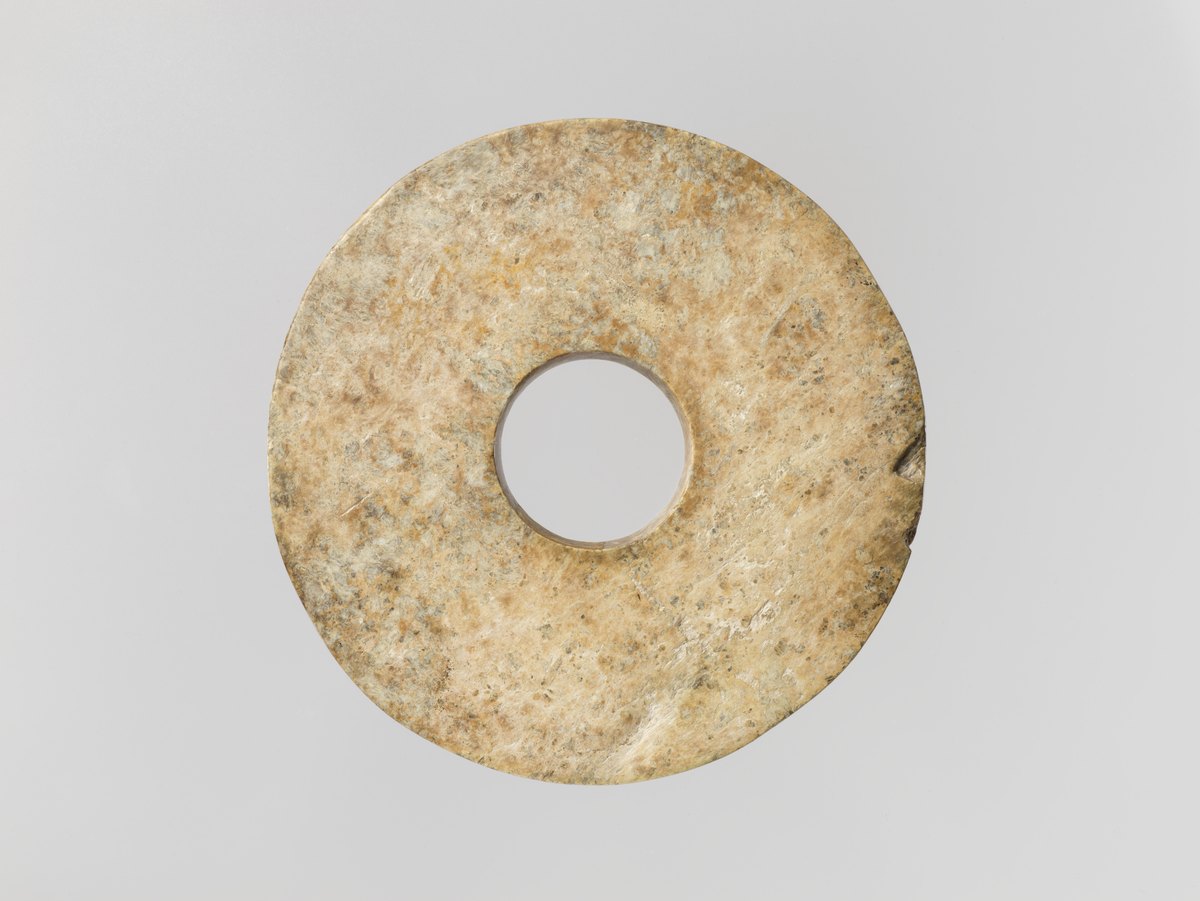
Every real artefact in this film is a photograph of an object you can go and look up. We caption them on screen because the caption is the product: an unsourced picture of an old thing is worth very little, and a sourced one is worth a great deal.
What the character was actually about
We started this one expecting to make a film about the sun and made one about record keeping. The Shang did not write the sun down because it was beautiful. They wrote it down because it was a unit of time on a document that had to be auditable by the dead.
That turned out to set the pattern for the whole series. The character is almost never about its subject. 日 is about the calendar and the archive. 木 turned out to be about labour and shelter rather than nature. 火 turned out to be about a rule. Looking up what a character depicts tells you what it drew. Looking up what it was used for tells you what people were doing.
SOURCES: the oracle bone, the bronze gui and the jade bi are all in the Metropolitan Museum's open access collection and were checked against the Met Collection API for public domain status at the time we downloaded them. Every image on this page is cleared for commercial use and the full credit list is kept in the repository beside the files.
The narration, in full
The complete spoken text of the film, 900 words. Published so it can be read, searched and quoted.
Read the transcript
One sun is 93 million miles away, a star so hot it shapes the fate of every living thing on Earth. The other is tiny enough to fit in a text message. And here is the strange part. They are the same picture. Back to the beginning. Northern China.
A place we now call Anyang. Three thousand years ago, the Shang rule from here. The oldest dynasty in China, whose writing we can still read. And the Shang have a problem. They want to know the future. Will it rain?
Will the harvest hold? Will the king win his war? So they ask. They're dead. Here's how you ask their ancestors a question. You take the shoulder blade of an ox or the flat shell of a turtle.
You carve your question into it. Then you press a red hot brown. The form of the crack is the answer. And they carve the answer next to the question, so the dead cannot wriggle out of it later. The bones remain in a pile.
Somewhere in that pile is a real bone that asks, more or less, will the king's toothache Stop hurting in the night? Some of the oldest writing in China is not a poem or a law. It is a man with a toothache, asking the universe to please, for once, be kind. And on some of those bones, when they carved the sun, they drew a circle, With a single point at the middle.
The Shang fall, the bones go into the ground and are forgotten. Farmers keep plowing them up, with no idea they are holding the oldest readable words In China. They end up in medicine shops, where they are labeled dragon bones, ground into powder, And sold as a cure for whatever ails you. The oldest words in China.
Until the tale goes. The year 1899. A scholar named Wang Yirong is ill, and they bring him his medicine. He looks down at the dragon bone about to be ground into his medicine. And he finds, cut into it, writing. He had nearly swallowed the beginning of Chinese history. Instead, he read it.
Carved into bone, cast in bronze, brushed onto bamboo, standardized again and again. It hardened into straight lines. The dot became a bar, and our little sun turned into a box with a line through the middle. From bamboo to paper, from paper to print, from print to pixels, onto the screen you May be looking at right now.
Three thousand years of the most stubborn doodle in human history, still meaning the sun and The day the sun makes. Before anyone owned a clock, that same light told people all over the world what time it was, what season it was, when to plant, and when to gather.
People lived by it. Look at the light landing on your face right now. It is old, really old. The energy warming your skin today may have begun the journey deep in the sun 100,000 Years ago. The sun is posting you a letter.
On the banks of the Nile, long before the Shang, people drew the sun as a disk, sometimes With a mark in the middle. A picture anyone might invent. The End They were looking at the same star.
Thank you. For almost all of the time we have watched it, one detail was wholly wrong. We said it climbs, and it crosses the sky, and it goes down. The sun does not cross the sky. It has been holding still, more or less, while we, on our spinning rock, turn toward it and Then turn away.
Every sunrise from now on is you turning back towards the fire. The sun does not come up. You come round. So evening. The rock turns. Your side of the world tips away from the light and the Sun goes down calm Unhurried fully certain it will be back and as it goes it hands you over to Something else a pale light on the other side of the sky the moon which the same People at Anyang on the same bones also drew. Not as a circle, the moon changes form night To night, but as a thin curve.
And then came the most beautiful thing in this whole world. They took the sun and the moon and put them side by side in one character. It means bright. The two biggest lights in the sky living in one little box. And that word bright is hiding in the name of the best day there is. Tomorrow. The bright day. The day the light comes back. One night, a poet far from home. He put bright beside the moon in the one line of Chinese poetry everybody knows.
Bright moonlight That poet And the frost he thought he saw on the floor And everything that comes next Is another story And that one belongs to the moon So Look up The moon is already there It is late Get some rest The sun goes down, and it comes round again.
And that little box, the great survivor, still holding the sun after 3000 years? You can say it now. That's the sun. Next time, the moon. If you want to be around when these characters give up more of what they hide, subscribe. And thank you very much for being here.
Every frame is painted by hand
This is Natasha at the desk.